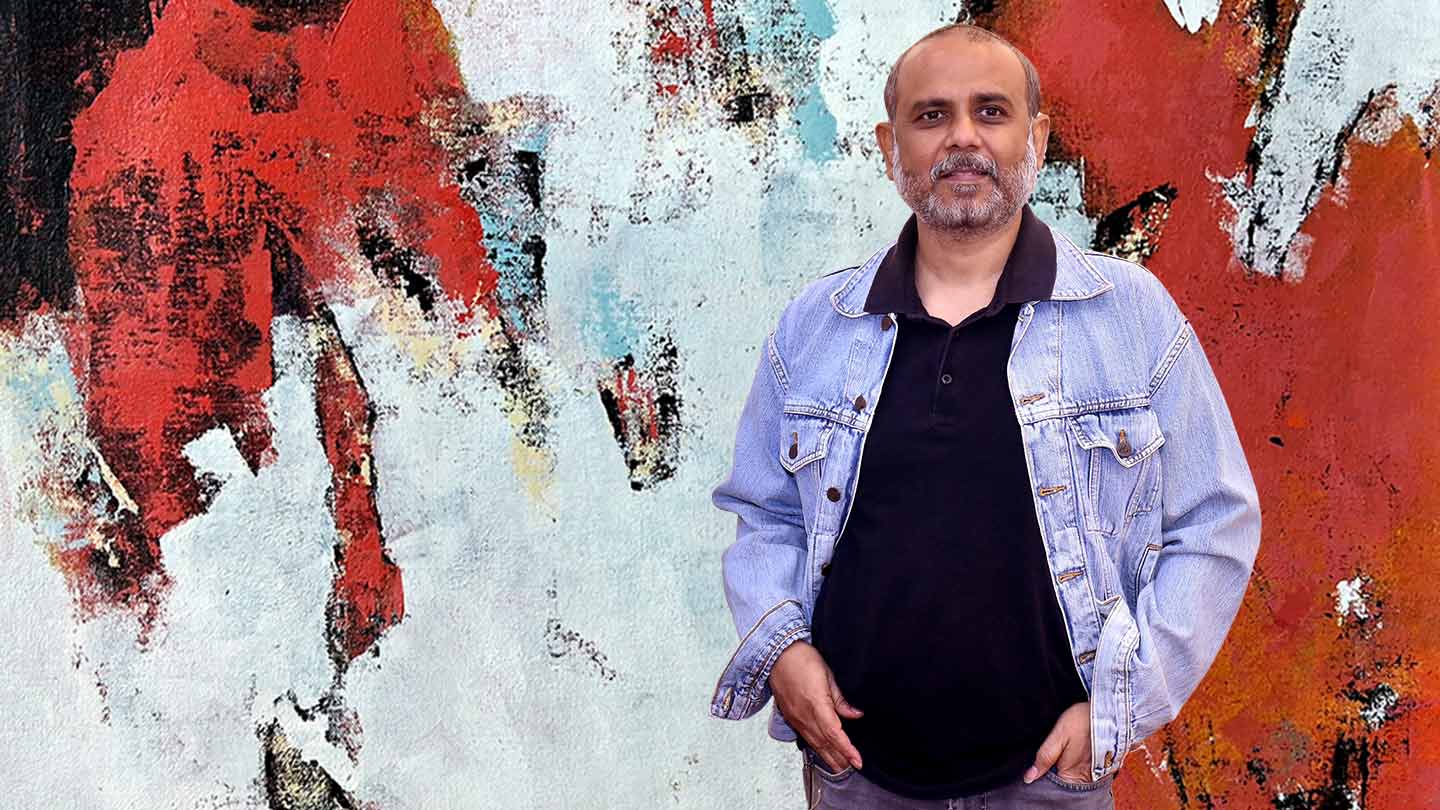
Kishore Pratim Biswas stands as a compelling voice in the landscape of the Indian contemporary artist movement—an artist whose journey spans classical academic training, decades of creative leadership in advertising, and a deeply personal return to fine art. Born and educated in India, Kishore earned his Bachelor of Visual Arts in Painting from the prestigious Government College of Art & Craft, Kolkata in 1997. This formative period laid a strong foundation in realism, composition, and visual storytelling—skills that would later define his signature style. After graduation, he entered the world of advertising, where he worked as a Creative Director, shaping brand narratives and visual identities for years. This exposure to communication, symbolism, and audience psychology profoundly influenced his artistic maturity. In 2009, Kishore relocated to Mumbai and established his own studio in Mira Road, marking a decisive shift from commercial creativity to the pursuit of modern contemporary art. Today, he is widely recognised as one of the famous Indian contemporary artists whose work resonates across collectors, curators, and art enthusiasts alike.
From Advertising to Art: A Contemporary Indian Artist’s Evolution
Unlike many young Indian contemporary artists who enter the art world directly from academic institutions, Kishore Pratim Biswas brings with him the rare advantage of decades spent in advertising and visual communication. This professional journey sharpened his understanding of narrative clarity, emotional impact, and visual balance—qualities that seamlessly translate into his paintings. His transition into full-time studio practice was not an abandonment of his past, but rather an evolution of it. The discipline of deadlines, the sensitivity to audience perception, and the mastery of visual hierarchy all find subtle expression in his artworks. As an Indian contemporary artist, Kishore’s work bridges classical realism with modern abstraction, personal memory with collective nostalgia. His canvases often reveal a quiet confidence—never loud, never forced—yet deeply evocative. This maturity sets him apart among the top 10 Indian contemporary artist discussions, where longevity, originality, and cultural relevance play a crucial role. His art does not chase trends; instead, it builds its own visual language rooted in time, memory, and transformation.
Nostalgia of Indian Steam Locomotives: A Signature Series of Cultural Memory
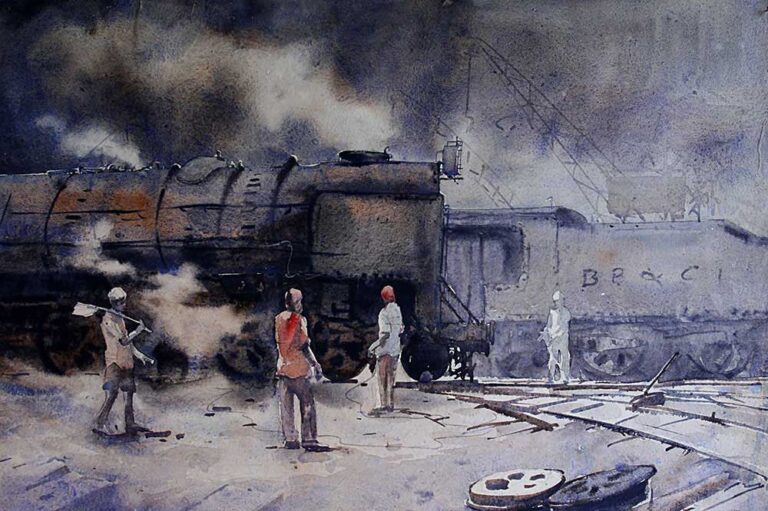
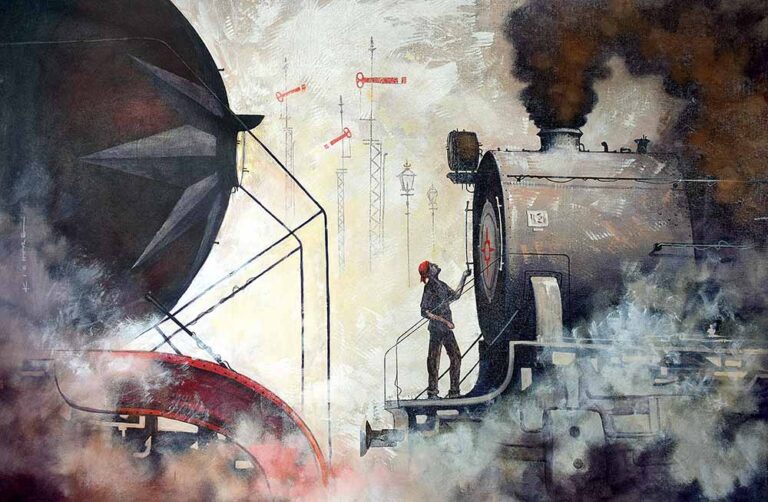
Among Kishore Pratim Biswas’s most celebrated bodies of work is the iconic series “Nostalgia of Indian Steam Locomotives.” This series has earned him global recognition for Indian steam locomotives paintings, positioning him uniquely within contemporary Indian art. These works are not mere mechanical representations; they are emotional archives of a bygone era. The steam locomotives of the 1970s India symbolised movement, progress, and human connection—linking cities, villages, and generations. Kishore captures these machines with remarkable sensitivity, portraying them as living entities breathing steam, memory, and time. The textured surfaces, atmospheric lighting, and controlled realism evoke the sound, heat, and rhythm of the rails. Today, this series has become his artistic signature, widely admired by collectors and critics alike. In the broader discourse of famous Indian contemporary artists, Kishore’s steam locomotive paintings stand out for their cultural specificity and emotional universality—making them relevant both within India and on international platforms.
Freedom of Beauty: Exploring Femininity, Mind, and Inner Liberation
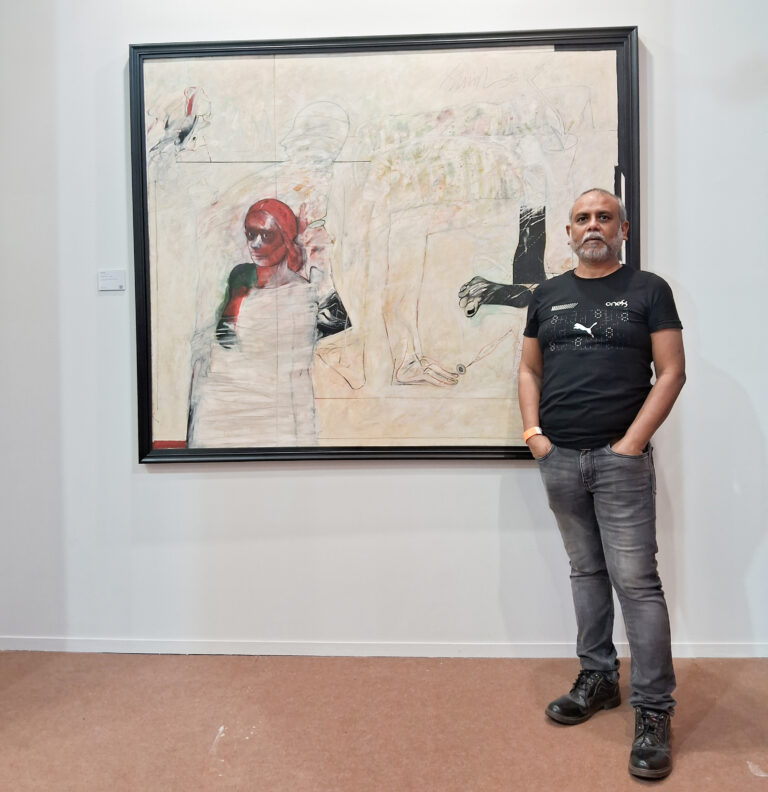
Complementing the mechanical nostalgia of steam locomotives is another powerful series titled “Freedom of Beauty.” In stark contrast to iron, steam, and industry, this body of work explores femininity, introspection, transformation, and inner freedom. These paintings often feature serene female forms, symbolic elements like butterflies, abstract color fields, and expressive textures. Here, Kishore Pratim Biswas delves into the psychological and spiritual dimensions of beauty—not as an external aesthetic, but as an internal state of being. The series reflects contemporary conversations around identity, mindfulness, and emotional liberation, making it particularly relevant among young Indian contemporary artists and modern collectors. The balance between realism and abstraction allows viewers to interpret the works personally, creating a quiet dialogue between canvas and observer. Together with the steam locomotive series, Freedom of Beauty demonstrates Kishore’s remarkable range as an Indian contemporary artist, capable of navigating both historical memory and modern emotional landscapes with equal depth.
Why Kishore Pratim Biswas Belongs Among the Best Indian Contemporary Artists
In today’s evolving art ecosystem, recognition as the Best Indian contemporary artist is not defined by popularity alone, but by authenticity, consistency, and cultural contribution. Kishore Pratim Biswas embodies all three. His ability to translate India’s industrial past into emotionally resonant art, while simultaneously exploring modern themes of freedom and self-reflection, places him firmly among the top 10 Indian contemporary artist conversations. His works appeal to a wide spectrum—art collectors, historians, interior designers, and cultural institutions—making his practice both relevant and enduring. As Indian steam locomotives paintings gain increasing international appreciation, Kishore’s name continues to rise among famous Indian contemporary artists who successfully represent Indian narratives on a global stage. Through his studio practice in Mumbai and ongoing artistic exploration, Kishore Pratim Biswas continues to shape a legacy that is deeply Indian yet universally human—making Artishore.com not just a portfolio, but a living archive of contemporary Indian art.